Muay Thai on Koh Samui: Watching a Fight Night and Training as a Visitor
By the Endless Summer crew · · 9 min read
Read in: Deutsch
Some links in this article go to GetYourGuide, which pays us a small commission if you book. It costs you nothing extra, and we only link trips we would send a friend on.
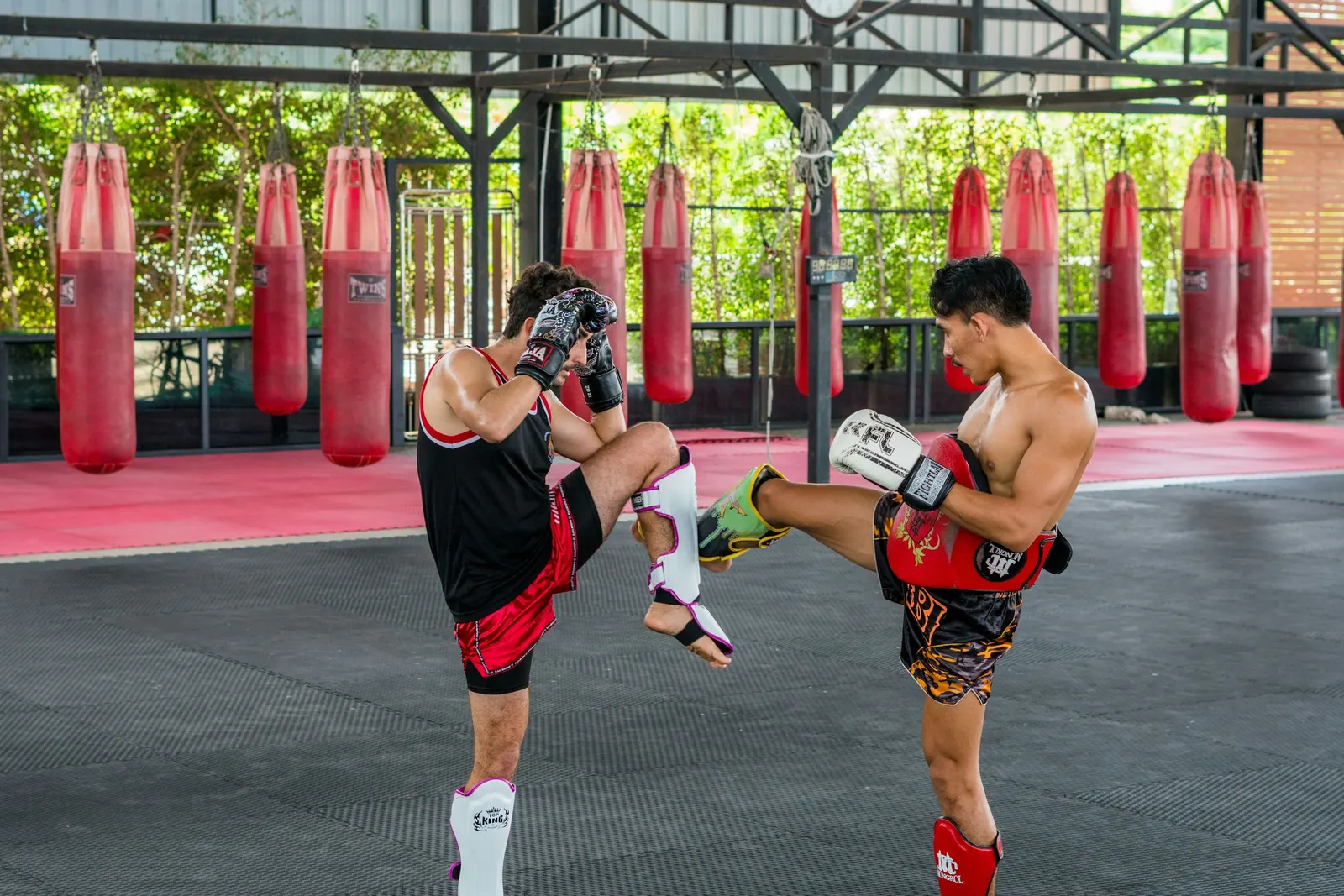
Muay Thai on Koh Samui comes in two forms for a visitor: watching a fight night at one of the stadiums in Chaweng, or putting on gloves for a class at a local gym. Both are easy to arrange in a week’s holiday, and neither needs any knowledge of the sport.
We are a boat crew, not a fight gym, so this guide sticks to what a first-timer needs: where the fights are, how an evening runs, which seats to book, whether to bring children, and what a beginner’s class actually involves. Schedules on the island change, so treat the times here as a starting point and check before you buy.
Where to watch a Muay Thai fight on Koh Samui
Koh Samui’s main Muay Thai stadiums are in the Chaweng area on the east coast, and they hold fight nights on set evenings. Days and start times change, so check the current schedule with your hotel desk, a ticket seller or the stadium before you plan around one. Each stadium puts on a card of several bouts with Thai and foreign fighters; choose by the night that suits your plans, then by seat type.
How a Muay Thai fight night runs
A fight night is a card of several bouts, building from the opening fights to a main event at the end. Gates open well before the first bout, which usually starts around 21:00 or 21:30, and the last fight often finishes close to midnight.
- The walk to the ring. Fighters enter wearing a mongkol, a sacred headband, and often a pra jiad, a cord tied around the upper arm. By tradition they step over the top rope, never under it.
- The wai kru ram muay. Before each bout, both fighters perform a slow ritual dance around the ring: kneeling, bowing and moving to the music to honour their teachers. It can last a few minutes. Watch it rather than your phone, because it is part of the fight, not an intermission.
- The music. A small band of drums, cymbals and a reedy Javanese oboe (pi Java) plays through every round, and the tempo rises when the action does.
- The rounds. Under professional rules a bout is up to five three-minute rounds; some cards for visitors run shorter bouts. Fighters can use fists, elbows, knees and shins, and grapple in the clinch, which is why the sport is called the art of eight limbs.
- The result. A bout ends early by knockout or stoppage, or goes to the judges’ decision. In Thai scoring the later rounds usually count for more, so do not judge a fight on the first round.
This is a full-contact sport. Cuts and knockouts happen, and the referee stops a bout when a fighter cannot continue. If that is not something you want to see close up, sit further back.
Ringside or standard seats: which should you book?
Book ringside if you want to hear the gloves land and see the fighters’ faces; book standard if you mainly want the atmosphere and the price matters. Both see the whole ring.
- Ringside. Chairs right next to the ring, the most expensive regular tickets. You are close enough to feel the noise of the corners between rounds.
- Standard (stadium) seats. Tiered bench seating further back. Benches can be hard without a back rest, so a cushion or a folded jacket helps on a long card.
- VIP seats. Some stadiums sell a VIP or sofa-style option. Worth it for comfort, not for a better view than ringside.
Popular nights, especially in high season, can sell out, so buy a day or two ahead. Some tickets include a hotel transfer and some do not: check before you pay. If you want a ticket booked in advance, this Phetch Buncha stadium ticket was rated 4.83 from over 1,300 reviews at the time of writing; the listing shows which seat you are buying.
Can children watch Muay Thai on Koh Samui?
Children are allowed in, and some stadiums sell child tickets, but think about three things before you take young ones: the late finish, the noise and what they will see.
- Time. A card that starts around 21:00 runs to about midnight. For under-tens, plan to leave after a few bouts rather than stay for the main event.
- Noise. The band, the commentator and the crowd are loud for hours. Ear defenders or earplugs help small children.
- Contact. Knockouts and cuts happen. Standard seats further back soften it; ringside does not.
- Young fighters. You may see young fighters on the early bouts. If that matters to you, ask when you buy.
Older children and teenagers who do martial arts at home often love it. For a gentler introduction, a family class at a gym in the daytime lets them try the moves without the late night.
Muay Thai training on Koh Samui: a group class or a private session
For a first try, a group class is the easy choice; a private session suits nervous beginners, anyone with an old injury, or people who want a trainer’s full attention for an hour. Gyms around the island take drop-in visitors, and the Lamai area is known for longer-stay camps if you want to train every day.
| Group class | Private session | |
|---|---|---|
| Typical length | Around 90 minutes | Around 60 minutes |
| Who holds the pads | A trainer, shared across the class | Your trainer, all session |
| Pace | Set by the class | Set for you |
| Best for | Fit beginners, friends, couples | Total beginners, injuries, faster progress |
| Cost | Lower | Higher, but the trainer is yours |
A beginners’ class usually follows the same shape: a warm-up with skipping and stretching, shadow boxing to learn the stance and basic strikes, pad rounds with a trainer, a few rounds on the heavy bag, then conditioning and a cool-down. Sparring is not part of a first class, and a good gym will not push you into it.
If you want to try it in the daytime before a fight night, this 90-minute beginners’ group class in Chaweng is a straightforward start; the same platform also lists one-to-one sessions of 60 minutes.
What to bring to a Muay Thai class, and how fit you need to be
You need no experience and no particular fitness level for a beginners’ class, but the heat makes everything harder than it is at home. Trainers adjust the work for beginners; tell them at the start if you have a bad knee, shoulder or back.
- Shorts and a T-shirt or vest you do not mind soaking. You train barefoot.
- Hand wraps. Gyms usually lend gloves; wraps are personal. A pair costs little at sports shops on the island, and the trainer will show you how to tie them.
- A large water bottle and something with electrolytes for afterwards.
- A towel and a change of clothes.
- No jewellery. Take off rings, watches and earrings before you start.
Hygiene matters in a hot, shared gym. Shower soon after training, cover any cuts, keep flip-flops on away from the mats, and wash or air your wraps between sessions. Skin infections spread easily in humid gyms, and these habits help.
Book a morning or late-afternoon class if you can, when the heat is lower. If you have a heart condition, are pregnant or are recovering from an injury, ask your doctor before you train.
Muay Thai etiquette at the stadium and in the gym
A few simple courtesies go a long way, and Thai trainers notice them.
- Greet your trainer with a wai, palms together at chest height with a slight bow, at the start and end of a class.
- Do not climb into a ring without being asked, and never with shoes on. If you are invited in, step over the top rope or between the ropes, as you are shown.
- Leave the mongkol alone. It is sacred to the fighter and his gym; do not touch it or ask to try it on.
- Respect the wai kru at the stadium: keep your seat and keep the noise down while it is performed.
- Feet down. Do not point the soles of your feet at people or rest them on the ring apron.
- Ask before photographing fighters up close, especially in the gym or the warm-up area.
Fitting a Muay Thai fight night into your Koh Samui week
A fight night works well as the second half of an evening, and if the stadium is covered it works on a wet night too; ask when you buy. Eat first in Chaweng, then go on to the stadium.
If you are out on the water with us that day, our Sunset Cruise runs Monday to Friday, from 16:00 to about 19:30, with free hotel pickup and drop-off. On a weekday with a fight night, that leaves time to eat before a card that starts around 21:00; check the current schedule before you book either.
For the rest of your week, our guide to things to do in Koh Samui has more evening ideas, and our rainy season guide covers what changes from mid-October to mid-December.
Questions people ask us
- Are there Muay Thai fights on Koh Samui?
- Yes. The main stadiums are in the Chaweng area and hold fight nights on set evenings, usually starting around 21:00 and finishing close to midnight. Days change, so check the current schedule with your hotel or a ticket seller before you buy. Phetch Buncha Boxing Stadium sells tickets online.
- What time do Muay Thai fights finish on Koh Samui?
- Usually close to midnight. Gates open well before the first bout, the first fight typically starts around 21:00 or 21:30, and a card of several bouts, each with the wai kru before it, fills the rest of the evening. If you have an early start the next day, you can leave after a few bouts.
- Am I too old to start Muay Thai?
- No. Beginners’ classes on Koh Samui take adults of every age, and most visitors train for fitness and fun, not to fight. A trainer will adjust the pace, and nobody spars in a first class. Tell the trainer about any injuries before you start, train in the cooler hours, drink plenty of water, and if you have a medical condition, ask your doctor first.
- Is Koh Samui good for Muay Thai training?
- For a holiday taster, yes: gyms around the island take drop-in visitors for group classes and private sessions, and you can watch a fight night the same week. For serious training over weeks, look at the longer-stay camps, several of them around Lamai, and ask about schedules, trainer numbers and accommodation before you commit.
Come out on the water with us
One handcrafted Thai teak cruiser, fifteen guests at most, free hotel pickup anywhere on Koh Samui.